


Analysts have pointed out that China’s economic growth remains heavily dependent on exports and state investment, while household consumption remains limited due to relatively low wages, high housing costs, and a weak social protection system.
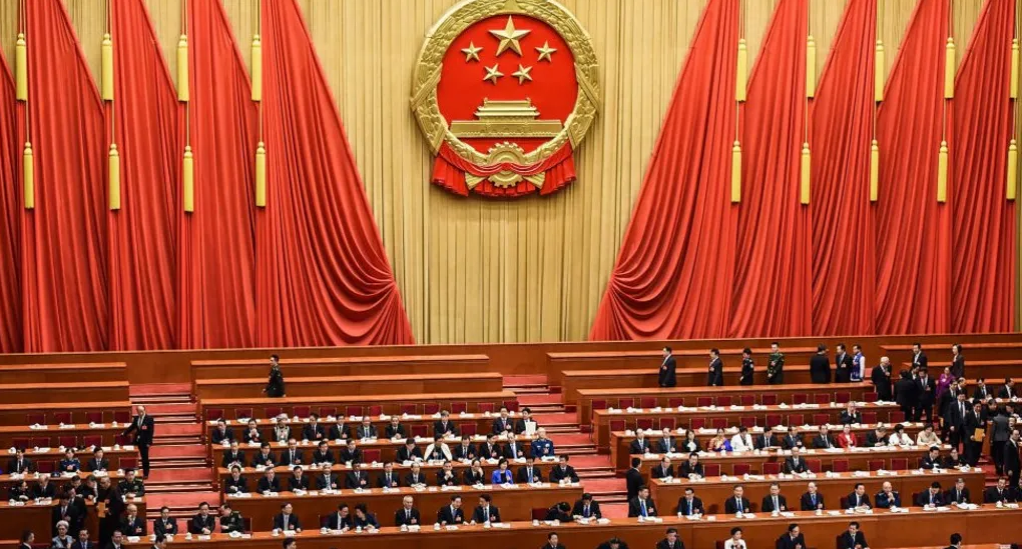
China’s National People’s Congress approved today the general guidelines of the 15th Five-Year Plan (2026–2030), which will guide the country’s economic policy over the next five years, reinforcing the focus on technology and domestic consumption.
The document, approved at the closing of the annual session of the Chinese legislative body, establishes as a priority “strengthening the role of domestic demand as the main driver of growth,” one of the most urgent challenges for the world’s second-largest economy after several years of relatively weak domestic consumption.
Analysts have noted that Chinese growth continues to rely heavily on exports and state investment, while household consumption remains constrained by relatively low wages, high housing costs, and a limited social safety net.
Although Chinese leaders recognize the need to stimulate domestic demand, the plan places technological innovation at the center of the economic strategy.
The text foresees “extraordinary measures” to achieve breakthroughs in sectors considered strategic, such as integrated circuits, industrial software, and advanced materials, at a time of growing technological rivalry between Beijing and Washington.
Competition between the world’s two largest economies has intensified in recent years, particularly in areas such as artificial intelligence, semiconductors, advanced computing, and emerging technologies that are expected to shape the global economy in the coming decades.
For Beijing, reducing dependence on foreign technologies has become a strategic priority, especially after restrictions imposed by the United States on the export of advanced components to Chinese companies.
Investment in science and innovation has been one of the pillars of the economic policy of Chinese President Xi Jinping, who has repeatedly emphasized the importance of technological self-sufficiency to guarantee the country’s economic security.
Chinese Prime Minister Li Qiang announced at the beginning of the parliamentary session a growth target between 4.5% and 5% for 2026, an objective considered relatively cautious and which should give the government room to focus on long-term structural reforms.
Experts expect Chinese authorities to gradually introduce measures to stimulate consumption, including the expansion of social security and the healthcare system, although much of the public resources will likely continue to be directed toward priority technological sectors, including artificial intelligence, robotics, clean energy, and advanced scientific research.
The Chinese legislative body also approved several laws during the annual session, including legislation related to ethnic minorities and other administrative areas, in a process where votes are traditionally almost unanimous and reflect institutional support for policies defined by the Chinese Communist Party.
During a press conference on the sidelines of the parliamentary meeting, Foreign Minister Wang Yi said the country will continue advancing in economic and technological development despite uncertainties in the international environment.
“We are moving forward at full speed in building a great country,” he said.
Source: O Jornal Económico
Translated with AI